Faith over Fear – Hope Revived

We have no sure way of knowing Jochebed’s thoughts, but since her faith is commended in Hebrews chapter 11 we can assume they weren’t solely for her son. She would have had a love for her people, the Israelites. She saw their suffering under the harsh Egyptian taskmasters. Her voice would have mingled with the cry that rose up to God, as we read later, “the cry of the children of Israel has come to Me, and I have also seen the oppression with which the Egyptians oppress them” (Exodus 3:9).

Did she even harbour a hope that Moses would grow up to become the one who would intercede on behalf of the Israelites.

Was she like Mordecai, who saw his cousin Esther placed in a position of power and privilege, and could say to her, “Yet who knows whether you have come to the kingdom for such a time as this?” (Esther 4:14).

Did Jochebed’s mind swirl with plans and ideas of how God might use her son in accomplishing his plan of deliverance? Is that what the New Testament commentary on her husband and her means when it says, “they saw he was a beautiful and divinely favoured child” (Hebrews 11:23 AMP)?

If so, at first it seemed things were going to plan. 

Now it came to pass in those days, when Moses was grown, that he went out to his brethren and looked at their burdens” (Exodus 2:11).

He wanted to help them. He hadn’t been hardened by his years growing up within a culture that was so against God’s people.

Is this what Jochebed had hoped for all along? Moses taking an interest in their plight, standing up to the Egyptians and trying to protect his own people.

But things go horribly wrong. A murder. An accusation. And Moses flees for his life, knowing that Pharaoh has discovered that he has killed an Egyptian.

Moses is now far away from the people of God. Gone away in disgrace. Any thought of him accomplishing a great work for God seems to have gone up in smoke.

Are Jochebed’s hopes dashed? Her plan, which she had nurtured in her heart, appears to have fallen to pieces.

Yet, although Jochebed’s plan might fail, God’s plan will stand firm.

“For My thoughts are not your thoughts, nor are your ways My ways”, says the Lord (Isaiah 55:8).

God was going to do a work in Moses while he was away from Egypt. He would take him from the palaces of Egypt out to a wilderness to look after sheep. It was here that Moses would encounter God in a way that he hadn’t encountered him while in Egypt.

After forty years in the wilderness, God appears to Moses in a burning bush.

Moses must come face to face with God.

He hears the voice from the burning bush declaring, “Do not draw near this place. Take your sandals off your feet, for the place where you stand is holy ground.” He hears God declaring, “I am the God of your father—the God of Abraham, the God of Isaac, and the God of Jacob.” 

And Moses hid his face, for he was afraid to look upon God (Exodus 3:5-6).

Moses is confronted with the holiness of God and must acknowledge his own sin.

The forty years in the wilderness have brought Moses to a point where he readily acknowledges his unfitness for the task God calls him to do. No longer is he the proud, strong Egyptian prince standing over another Egyptian and striking him down. We now hear Moses saying, “Who am I that I should go to Pharaoh and bring the Israelites out of Egypt?” (Exodus 3:11 NIV).

Moses has learned humility and his own unworthiness. It is from this posture of humility that God will use Moses mightily to show His own great power over Pharaoh and all of Egypt.

We scan across the years and see God bringing Moses from the wilderness back to Egypt to be the leader of His people. To speak for God, to show God’s mighty works, to bring those who were bound in slavery out to freedom. To lead God’s people all the way through the wilderness. To be the one who received God’s law, the one to whom God showed His glory. 

We don’t know how long Jochebed lived, and how much of Moses’ life she got to see. Did she live through those forty long years? Years of waiting and wondering. Hope flickering dimly.

Perhaps your own children are far away from where you would like them to be? Perhaps they have turned away from the faith. Perhaps your heart is heavy with despair and the situation seems hopeless.

Let us hold on to hope and continue to pray in faith.

“Why are you cast down, O my soul? And why are you disquieted within me? Hope in God, for I shall yet praise Him” (Psalm 42:5).

We have an advantage over Jochebed, as we know the great man of God Moses became. 

What joy would have filled her soul if she could have seen into the future and watched her son (the one she had entrusted to God so many years before) as he stands before the people of Israel. They are filled with fear as God comes down to speak to them. Smoke billows up from the mountain as the Lord descends on it in fire, with thundering and lightning. The people are so afraid that they refuse to come near to hear God’s message to them. But Moses steps forward. Confident. Unafraid. He will go near to God. 

Later Moses would say, “I stood between the Lord and you at that time, to declare to you the word of the Lord; for you were afraid because of the fire, and you did not go up the mountain” (Deuteronomy 5:5).

How was Moses able to confidently stand before God unafraid?

From that first day standing at the burning bush, when he hid his face from God, something had changed in Moses. 

Moses had come to know God for himself.

God had said to him, ‘I know you by name, and you have also found grace in My sight’ (Exodus 33:12).

Though he knew he was a sinner, yet Moses trusted in the grace that God extended to him.  

Moses became one of the greatest men of God. His deepest desire was to know God personally. He would say to God, “Now therefore, I pray, if I have found grace in Your sight, show me now Your way, that I may know You and that I may find grace in Your sight” (Exodus 33:13). The close relationship Moses had with the Lord is recorded for us, as we read, “So the Lord spoke to Moses face to face, as a man speaks to his friend” (v.11). 

The faith of Jochebed played a huge part in Moses’ life but, ultimately, Moses belonged to God. And it was God who stepped into his life in a mighty way. When we, as mothers, fear for our children and the path they are on, let us remember the God who intervened in Moses’ life. We can trust in the goodness of this same God to speak into our own children’s lives.

Let us, like Jochebed, be women whose faith is firmly anchored in God, remembering that “with God nothing will be impossible” (Luke 1:37).

Faith Over Fear – Releasing into the World

Jochebed’s time to release her son into the world came – much sooner than she would have liked. But her attitude gives us great hope, even in such a heart-wrenching situation.  

She had a plan. And when she could no longer hide her baby at home, she went into action. 

She carefully made a basket, placed her son in it, and set him in the river near where Pharaoh’s daughter often bathed (Exodus 2:3). How did she feel, knowing that any hope of his life being saved would also mean that he would grow up as an Egyptian, in the palace of Egypt? That he would be immersed in a culture that was opposed to the truth of God? 

Jochebed was a woman of faith. She believed that God could preserve her son in an ungodly environment. It was this faith in God that empowered her act. So we watch, as she builds her little basket for him so carefully and then places him among the reeds by the river’s edge. 

Jochebed was an Israelite whose faith and trust was in the one true God, the Creator of heaven and earth. She wanted her son to love and serve God too, and yet here she was apparently risking all this in order to save his life. If found by Pharaoh’s daughter, Moses would possibly grow up in an environment where multiple false gods were worshipped. Where there was no knowledge of the one true God and His ways.

Yet, her great faith in God shone out. She believed God had a plan for her son. And so, even as she tucked her son carefully into the basket, she placed her own faith in the God of heaven to protect him.

However, this wasn’t a careless abandonment. She didn’t turn her back and walk away. She carefully orchestrated events as far as she could, and was ready to offer her services to Pharaoh’s daughter as a nursemaid, ensuring that she would be the one to care for her son (vv.4-9). 

This put Jochebed in a unique position. Her son would be known as the son of Pharoah’s daughter, yet she was able to maintain a deep connection with him. Not only did she nourish him with food and surround him with love, but she began her crucial work of equipping him for the life that would be his. Jochebed would have used every opportunity to pour into his young life. What she did in those years (however few they were) was of great import. 

She made sure he had a true understanding of his identity. That he was an Israelite – not an Egyptian. That becomes clear later on:

“Now it came to pass in those days, when Moses was grown, that he went out to his brethren and looked at their burdens” (v.11).

He knew who he was. He may have looked like an Egyptian, but he was not. He had another identity that he could choose to embrace and walk into.

Surely Moses’ mother would have told him the tales of his history. The great story of creation; of Adam and Eve, and how sin came into the world. The stories of Abraham, Isaac and Jacob. Of Joseph, too, and how their people came to be in Egypt. 

She would have taught him about God, the promise-giver. The one who had promised they would be delivered out of Egypt and brought to a land of their own. 

As Moses watched his birth family, he must have seen something that he would not find when in the palaces of Egypt. 

They had something of more value. There was something of God in their home. Something of the love of God. A strong faith in God and a hope that God would deliver them. 

Was it this godly, loving home that sparked the flame of faith in Moses’ heart?

The impact of a faith-filled mother and father who showed him what was truly greater riches?

So that we read in the New Testament that “Moses, when he became of age, refused to be called the son of Pharaoh’s daughter, choosing rather to suffer affliction with the people of God than to enjoy the passing pleasures of sin” (Hebrews 11:24). 

Jochebed and her husband could have been filled with fear at the thought of sending Moses into such an ungodly world, and continued to hide him in their house.

However, Jochebed chose the path of faith. To trust God with her child. 

Did she even have hopes of a saviour for her people? Did she harbour her own ideas of how Moses could grow up and assist her people in freedom from slavery.

Jochebed was a woman of vision and great faith. Do we dare to be, too?

“Be strong and of good courage, do not fear nor be afraid of them; for the Lord your God, He is the One who goes with you. He will not leave you nor forsake you.” (Deuteronomy 31:6)

Faith Over Fear – A Shelter From The World

The first step in Jochebed’s journey of faith was to hide her son from those who sought his life. She didn’t know how she would continue to keep him safe, but she knew she must do what she could to save his life, so she took the first step. She kept him safely hidden in her house. He knew nothing of the dangers that surrounded him and the threat on his life.

When we consider our own children and the dangerous world around them, we can do what we can to ensure that their early years are ones of shelter and protection.

They should feel safe and loved from their earliest days. Our homes should be a haven from the world; a place where our children can grow, safe from harm. We should be guarding their minds from unnecessary fears by taking care what voices they are exposed to. Giving our children a foundation of love and security in which to flourish.

In those first few months of Moses’ life, Jochebed’s focus was on caring for Moses. I’m sure she did feel fear during that time about what the future might hold, yet her priority was on Moses’ well-being there and then. Her fears didn’t keep her from doing what she needed to do “now”.

Sometimes I have found my mind filled with fears about the future, to the point that I am not carrying out today’s responsibilities very well. My mind is far away, I am not being present in the moment with my children. I am not considering that they have needs today. I am worrying about future concerns; perhaps decisions around schooling, or fears of their future based on current behaviours. Or dreaming up a scary scenario that may or may not happen.

These thought patterns can really freeze us up in our day-to-day life with young children.

It is good to remember the words of the Lord Jesus.

“Do not worry about tomorrow, for tomorrow will look after itself. Sufficient for the day is its own trouble” (Matthew 6:34).

When we live in the future, we are full of anxiety, our mind full of “what-ifs”.

But what if we, like Jochebed, focused on the present and put our energy to good use for the needs our children have today?

And as we look into their little faces, we remember that they are precious to God and entrusted to us. That we should do what we can to create a haven of security and love for our children; an environment for them to grow in confidence, knowing they are loved unconditionally; a place where the world does not encroach, where they can live in peace and safety.

Doing this will give them a solid foundation beneath them.

There will come a time when they need to step out into the world and we need to prepare them for that. But that will be the subject of the next post!

Faith over Fear – A Frightening World

Our world looms around us. Its morality in tatters. Right is wrong. Wrong is right. 

This is the world our children have been born into. The world they will grow up in. This is their generation.

Do thoughts of this fill us with fear? If so, how do we, as parents, navigate these fears? Fears that our children will have to face the world with such realities or fears that they may be swept away in the tide of an ungodly culture.

I’ve been thinking about fear and the impact it has on us. Fear can paralyse us in daily living. It also impacts our decision-making in parenting. 

There is a woman in the Bible I have been considering. And I have been challenged by her response to fear in the frightening world she found herself in. Jochebed lived many years ago when Israel was a fledgling nation living in Egypt (see Exodus 1 and 2). The people of Israel were slaves under Pharaoh. Pharaoh was worried. The population of Israel was multiplying, and Pharaoh was afraid the people might rebel against him. His solution was to engage in some social engineering. He announced a new law that all Israelite baby boys should be thrown into the River Nile at birth; thus radically affecting population growth.

It is here that we first meet Jochebed. She was affected by this new law. She was expecting a baby and if it was a boy, which it was, he would be condemned to death in the river.  

What fear must have gripped her heart!

Jochebed and her husband had every reason to be afraid, yet in Hebrews 11 we read, “. . . and they were not afraid of the king’s command” (Hebrews 11:23).

Jochebed was not frozen in fear by the power of Egypt. She didn’t collapse in defeat, resigned to the inevitable death of her son. She did what she could, to preserve the life of her son. 

How did she overcome a very natural fear and have the courage to go against the king’s command? 

It was by faith. She had her faith in a great God. She looked on her newborn son and she saw him from God’s perspective. She saw the blessing, beauty and value of this child that God had entrusted to her. She hoped in God. She would not allow her son to be lost to the river so she hid him, in direct defiance of the king of Egypt. 

We can choose to have Jochebed’s vision. To see our children as blessings from God, of great value to God, and precious. When we bring God into the picture, we receive a vision of hope. I love how there is such a strong link between her faith in God and not being afraid. God loves our child and has a purpose for our child. We can look in faith to the future. We don’t have to give in to fear and despair, convinced our children will be swept away by the culture of this world. Jochebed believed God was greater than all the power of Egypt. She dared to hope.

We can learn from her example. We too have “a great God and Saviour Jesus Christ” (Titus 2:13). The One who loved us enough to die for us. He has overcome the power of evil in this world. “Having disarmed principalities and powers, He made a public spectacle of them, triumphing over them in it” (Colossians 2:15).

The Lord Jesus told His disciples, “In this world you will have trouble but be not afraid. I have overcome the world” (John 16:33).

We will have trouble in this world, but we need not live in fear. 

Like Jochebed, we must have our faith anchored in God. We need a heavenly perspective.

Jochebed had a faith in God that overcame her natural fears. She had faith in God’s goodness despite the awful happenings she was witnessing all around. She watched with horror at the fate of children around her, but she dared to believe in more for her son. And she rested her faith in her God to bring it about. 

We do not know the future, and what is in store for our own children. But, like Jochebed, we can have faith in God.

Let us dare to hope for our children. That they will not just survive living in this world but they will thrive. That they will “serve their own generation by the will of God” (Acts 13:36). 

The Light of Her Example

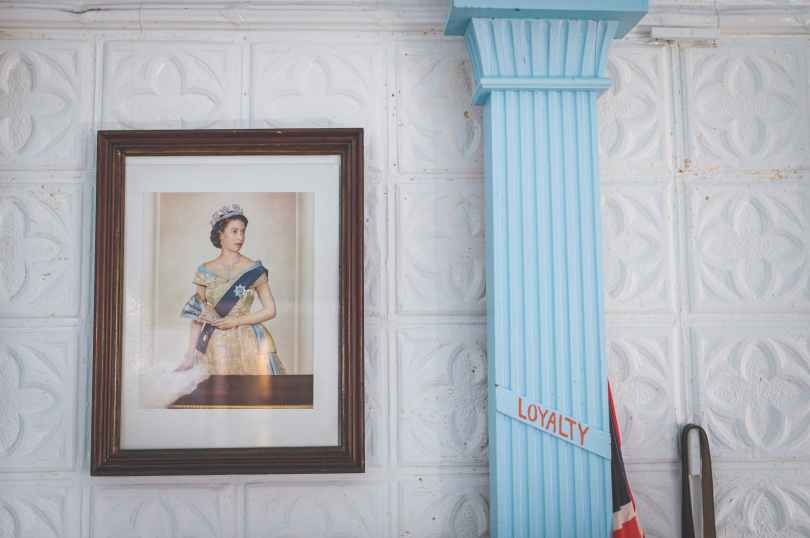
Queen Elizabeth II, 1926 – 2022.

Living a life close to God is seen as archaic, yet the life lived out by the Queen should give us pause. The love and compassion, strength and integrity, goodness and kindness, peace and joy the world witnessed came from her God, whom she loved and served.

Our sympathies are with the Royal family as they grieve the loss of a much-loved mother, grandmother, great-grandmother and matriarch of the whole family. The words of the Prince of Wales found an echo in my heart, as I’m sure they did for many.

“And while I will grieve her loss, I also feel incredibly grateful.”

(princeandprincessofwales, Instagram)

Incredibly grateful.

The world has been truly blessed to have had seventy years of her consistent, shining example.

But what was it that drew the hearts of so many to not only honour her as Queen, but to love her? Even those who may not support the idea of a monarchy or may not approve of what she represents have spoken with respect and admiration about her person and character.

Beauty and regal splendour surrounded her. She had dignity and poise, but it was neither a cold dignity, nor a detached poise. She combined elegance with humility, service with compassion, and wisdom with warmth. Duty was entered into with joy, and the strength and integrity she modelled was blended with her ready wit and good humour.

She upheld for us all a standard of something seemingly forgotten. Virtues from a previous age.

Her love for all people was evident.

This was not merely her own love, but as she spoke about in her Christmas broadcast 2011, “. . . the love of God through Jesus Christ our Lord”.

Her keystone.


“For me, the life of Jesus Christ, the Prince of Peace, . . . is an inspiration and an anchor in my life.”

(The Queen, 2014).

She had lived her life knowing the love of God and trusting in her Saviour Jesus Christ.

She often spoke of Jesus of Nazareth as an example to follow in His life of service and giving to others. Yet she knew He was not merely a great example.

“Although we are capable of great acts of kindness, history teaches us that we sometimes need saving from ourselves – from our recklessness or our greed. God sent into the world a unique person – neither a philosopher nor a general (important though they are) – but a Saviour, with the power to forgive.”

(The Queen, 2011).

As she lived her life, devoted to her God, and speaking with Him daily in prayer, her life became increasingly a reflection of God’s love and God’s goodness.

She bestowed that goodness and love on the nation and perhaps we didn’t realise the hope it gave us.

Many have confessed to being surprised by the depth of their emotion on the announcement of the Queen’s passing.

We feel bereft. It is truly the end of an era and without doubt a monumental historic moment.

But beyond that there is a greater loss. She embodied something bigger.
Many have abandoned the idea of God, yet Queen Elizabeth credited her life to God’s steadfast love and faithfulness to her. Living a life close to God is seen as archaic, yet the life lived out by the Queen should give us pause. The love and compassion, strength and integrity, goodness and kindness, peace and joy the world witnessed came from her God, whom she loved and served.

And it flowed out to those around her.

As she said of Jesus in 1975, “His simple message of love has been turning the world upside down ever since. He showed that what people are and what they do, does matter and does make all the difference.”

“Good spreads outwards,” she noted (1976).

In 1939 as the country was entering into war, a young Elizabeth handed her father a poem which he included in his Christmas Day broadcast that year. 


I said to the Man at the gate of the year
“Give me a light that I may tread safely into the unknown.”
And he replied, “Go out into the darkness, and put your hand into the hand of God.
That shall be to you better than light and safer than a known way.”

Minnie Louise Haskins


Today, as we look at the world around us, the future seems dark and foreboding.
Perhaps we should take to heart the wise advice of Queen Elizabeth to “Go out into the darkness and put your hand into the hand of God”. 

The world has witnessed a lifetime of Queen Elizabeth living before them with strength, love and dignity and it is telling that on the occasion of her 90th birthday she again called on us to reflect on the words of this poem. (The Servant Queen and the King she serves, 2016).
She would assure us with the experience of a lifetime, that “that shall be better to you than light, and safer than a known way.”

Life Beyond Death

I didn’t know it then. That we only had three days left.

I had watched her grow weaker that week. Helplessly looking on. Faced with the relentless march of that terrible disease. There is nothing you can do when the cancer seems to have won. When your loved one has no strength left to fight the battle and all hope seems gone.

Side by side we sat on the sofa. This mother-in-law of mine who had welcomed me into her family, loved me so well, taught me so much. A strong, hard-working, capable woman. Her love and determination had propelled her out of bed to attend to a few matters. Certain tasks must be taken care of. Mundane little items, but important to the smooth running of her home and the family business. Her world.

But her strength had abandoned her. And so, we sat. Silent. Knowing.

Lyrics of a familiar song drifted across the room.

“And then one day

I’ll cross that river,

I’ll fight life’s final war with pain;

And then as death gives way to victory,

I’ll see the lights of glory

And I’ll know He reigns.”

The lyrics crashed over me in all their awful reality.

“And then one day I’ll cross the river.”

It loomed ever closer.

I sat silent.

But the song was not over yet.

Because He lives,

I can face tomorrow.

Because He lives,

All fear is gone.

Who is it talking about?

Jesus Christ. God coming to earth as a man to be the one sacrifice for the sin of the world. He died, but three days later He came back to life, appearing to many of His disciples – those fearful men and women, hiding away in an upper room with the doors locked. Some days later, He ascended into heaven, as His disciples watched. The first real man going into heaven.

Jesus’ disciples were changed. They became bold men and women, fearlessly telling the world about the risen Lord Jesus. What had they to fear now? Their hope was in One who had power over death itself. He was their Lord and Saviour.

I felt a little bit of heaven touch my soul.

Jesus is alive! Death is defeated.

We can face our tomorrow. Even if . . .

Death may be unwelcome. It is still an enemy. Separation from our loved ones is painful. We mourn, we grieve. However, death need not be feared. Our Lord has walked this way before us. He has gone through death and come out victorious. Making a way for us to follow. Death for us is merely a passageway over to our living Saviour and to life in all its fullness. If we are trusting in Jesus Christ as our Saviour, we have this assurance.

Jesus said, “Because I live, you also will live” (John 14:19 ESV).

Death does not win.

“Where, O death, is your victory? Where, O death, is your sting? The sting of death is sin, and the power of sin is the law. But thanks be to God! He gives us the victory through our Lord Jesus Christ” (1 Corinthians 15:55-57 NIV).


A Year of Rest

As we entered this year, 2022, the word that floated around and settled in my mind was REST.  It may have had something to do with the busy Christmas season we had just come through. Time with lots of family is wonderful, and very precious – but it can be exhausting!

Or it may have been that as I looked back on some turbulent years for our family, the idea of a year of rest sounded appealing.

The truth is, as we take our first few steps into a new year, none of us knows what the year will hold. It could be one of peace and tranquility, or it could be the year that leaves us clinging on for dear life as our world spins out of control. 

The challenge that came to my heart was this. Can I choose to rest in God this year, no matter what I might find myself facing?

To remember that my life is secure in God’s hand. That He is in control and not me.

Can I bring my troubles to Him and leave them with Him? Cease trying to solve everything myself.

What will draw me more toward this resting in the Lord?

I think perhaps, it will be knowing more of Him.

Last year I thought it would be a good idea to try and read through the Bible in a year. So I started following a 1-year chronological Bible reading plan. Now, a year later, I am still wading my way through Jeremiah (Lets be real – I was never going to stick to a program all year!) However, despite my falling off the wagon, I really would recommend it. There is something to be gained by reading through the Bible swiftly and seeing how everything fits together.

And, even though I slowed my pace halfway through the year, it has been incredible to me to see God’s character jump off the pages of the Old Testament as I followed His interactions with His people from creation all the way to the time of Jeremiah when the people are finally taken into captivity. Often, we think of the God of the Old Testament as harsh and angry, but I was struck by how often we read of God’s love and compassion. How we see His heart for mercy and kindness.

God was angry at the evil that was being done. The injustices, the oppression.

Cease to do evil. Learn to do good; Seek justice, Rebuke the oppressor; Defend the fatherless, Plead for the widow.

Isaiah 1.17

This is repeated over and over. God’s heart is grieved at the evils of this world, the harm we do to one another.

He desires righteousness because He is a God of love. Righteousness isn’t just some arbitrary standard that God set up to spoil our fun. It is truly good! Because God is truly good.

The nation of Israel had turned to other gods, and the result was an increase in wickedness and evil. His yearning is for His people to return to Him. To come back to Him – and in so doing to come back to righteousness, love, mercy and rest.

Thus says the Lord, “Stand at the crossroads and look; ask for the ancient paths, ask where the good way is, and walk in it, and you will find rest for your souls.”

Jeremiah 6.16

Rest for our souls. That what we want this year.

And this rest comes from our great God and Saviour Jesus Christ.

Jesus said, Come to Me, all you who labour and are heavy laden, and I will give you rest. Take my yoke upon you and learn from Me, for I am gentle and lowly in heart, and you will find rest for your souls.

Matthew 11.28,29

May we come to the Saviour, walk alongside Him and learn from Him this year.

And so, find rest for our souls.

The Good Part

Does your “to do” list ever bother you? Do you leap out of bed in the morning excited to start making your way through it? Or does it feel more like a weight that you wake up to every day? Whether or not you have a written list, is your mind filled with anxiety as you contemplate all you have to do?

If the latter is true for you, then I think you will be able to identify with Martha. She lived with her brother and her sister Mary; they were friends of Jesus, and He was often in their home.

I have heard this story many times and when I was younger I often wondered which of the two sisters I was more like. I really wasn’t a Mary – definitely not spiritual enough for that – I was not the kind of girl who conscientiously read her Bible every day. Yet I also didn’t feel worthy to be a Martha.

Martha sounds like one of those terribly efficient people. She got things done. She kept a spotless house and baked and cooked and gardened – at least this is what I imagined.

More recently, though, I am coming to realise that I am more like Martha than I thought. No, I am still not terribly efficient; I am working on being more productive and on top of things. However, a little phrase stood out to me in the story and made me stop and think.

Now it happened as they went that He entered a certain village; and a certain woman named Martha welcomed Him into her house. And she had a sister called Mary, who also sat at Jesus’ feet and heard His word. But Martha was distracted with much serving, and she approached Him and said, ‘Lord, do You not care that my sister has left me to serve alone? Therefore tell her to help me.’ And Jesus answered and said to her, ‘Martha, Martha, you are worried and troubled about many things. But one thing is needed, and Mary has chosen that good part, which will not be taken away from her’” (Luke 10:38-42).

“Martha, Martha, you are worried and troubled about many things.”

Well, that feels familiar. Very familiar.

Trying to keep all the balls in the air. Remembering everyone’s schedule. Making sure dishes, clothes and people are cleaned on a regular basis. Not to mention homework, my own work, church meetings, friends and other family members to keep up with.

My “to do” list can silently scream at me all day. My mind is not at peace. It’s frenzied, overwhelmed, anxious.

Like Martha’s.

The Lord responds so lovingly to her.

“Martha, Martha, you are worried and troubled about many things. But one thing is needed, and Mary has chosen that good part, which will not be taken away from her.”

Martha may have felt like replying, “I know Mary has chosen the good part! It would be wonderful to sit and listen to You, but there are so many things that need to be done.”

And we modern day “Marthas” will say, “I don’t have time to read my Bible today, I must rush on. There is so much to do.”

But the same answer comes to us.

“One thing is needed. Mary has chosen that good part, which will not be taken away from her”.

The Lord Jesus spoke these words. But do we believe Him?

There are so many things we need to do in a day. How do we decide what is a priority? If we are Christians, then we should be getting our priorities from God’s Word.

Our first priority is our relationship with God and with Christ:

“You shall love the Lord your God with all your heart, with all your soul, and with all your mind” (Matthew 22:37). “Seek first the kingdom of God and His righteousness” (Matthew 6:33).

If we are wives and mothers, our next priority is to our family and, depending on circumstances, possibly also to our extended family:

“They are to teach what is good, and so train the young women to love their husbands and children” (Titus 2:3-4 ESV).

Then, whatever our marital status, we have our local church of Christians that we are to meet with regularly, and individual Christians who may need to be encouraged in their faith. “And let us consider one another in order to stir up love and good works, not forsaking the assembling of ourselves together” (Hebrews 10:24-25).

We may also have other responsibilities, such as to employers or activities we’ve committed to in our local community.

Within this framework we can start to order our life, but every day we will be faced with choices. Things come up, and often our “to do” list is left by the wayside as we react to whatever is happening right now, however unimportant it might be. Or, on the other hand, we may be so focused on the “to do” list that we miss the child who needs a bit of extra attention or the friend who needs an encouraging word.

How do we have wisdom for each day? We think we have so much to do each day, but how much of that is following our own pre-conceived plans, rather than being sensitive to God’s leading.

Martha was troubled and worried over many things, but Jesus told her, “One thing is needed”. Do we add things to our “to do” list that are of our own making due to pride, a desire to look good before others, or wanting to maintain our own personal standards of perfection? What if, instead, we focused on seeking to learn what God wants us to be doing in our life?

The Lord Jesus showed us what it was to seek God’s face each day. He was often found alone, speaking to His Father. Mark chapter 1 verses 35-38 records an interesting story that was recently brought to my attention. The Lord Jesus had risen very early in the morning and gone out to a solitary place to pray. Simon and others came to find Him and said to him, “Everyone is looking for You”. But Jesus said to them, “Let us go into the next towns, that I may preach there also, because for this purpose I have come forth”.

The Lord Jesus didn’t react to the crowds that wanted Him. He looked to His Father to find His purpose and followed that path. He wasn’t a people pleaser, nor was He ever frantic or hurried.

Are we focused on finding what God wants of us each day? Or are we worried and troubled by all the things that we think other people are expecting of us or even that we are expecting of ourselves?  

Will we have the courage to do the one thing that is needed?

Mary chose the better part. To sit at His feet and to learn of Him. This is the most important thing we can do: spend time with the Bible each day, reading, thinking about and talking to the Lord. This way we will gain clarity to know what God values in our life and where we should be putting our efforts each day. We may even find ourselves adjusting that “to do” list!


A Joyful Mother of Children

The year 2020 has given us all more time to pause and reflect. One thing that has impressed itself on me is the family God has blessed me with. As other outside demands and activities faded into the background, I noticed my family coming into clearer focus.

In our culture, it is easy to relegate our children to the bottom of the pile of things to do. We have our to-do list, and our children’s needs are often fitted in around our schedule. It led me to think of the high value God puts on children.

“Children are a heritage from the Lord.”

Psalm 127:3

“Jesus said, ‘Let the little children come to me, and do not hinder them, for the kingdom of heaven belongs to such as these.’”

Matthew 19:14 NIV

In the early church, encouragement was given for the older women to “urge the younger women to love their husbands and children” (Titus 2:4 NIV).

Loving our children can be seen in a variety of ways. It is looking after their wellbeing. Creating a healthy, peaceful environment for them to live in. Caring for their physical, emotional and spiritual wellbeing. I have had to ask myself, am I being intentional in my parenting? Am I letting my children spend too much time on screens, so I can “get stuff done”?

Being intentional takes effort. And time. And planning. And doing.

I want to involve my children in the life of the home, by having them help with chores, teaching them skills for life, so they will feel a valuable part of the family and will be prepared for independence when the time comes for it.

I want to be more intentional about instilling spiritual values into my children. Not in a stiff, formal way, but, sprinkling it in throughout the day.

“Teach them to your children, talking about them when you sit at home and when you walk along the road, when you lie down and when you get up.”

Deuteronomy 11:19 NIV

I want to create more of a learning environment in our home, where good books are read and shared, introducing my children to great men and women of faith from past generations. 

And I want to get involved in their lives. Find out what their interests are, take time to listen, and learn about them.

Often as mothers, we find ourselves constantly directing, instructing, correcting. But it is good to take time to stop and listen. To stop and play. To enter their world for a while. To have fun with them!

Psalm 113 verse 9 says, “He grants the barren woman a home, like a joyful mother of children”.

A joyful mother?

When I first came across that phrase it caused me to pause. Am I a joyful mother? Unfortunately, I had to admit I was often definitely not a joyful mother. Motherhood is hard work. But as I thought about being a joyful mother, it helped to remind me that children are a gift from God. He has kindly blessed me and my husband with four healthy boys. We should value them as much as God does and see them as the main responsibility in our lives, not an added extra.

This past year has made me reconsider my priorities. Yes, I am called to serve within my church family, and to reach out into my community, but not at the expense of loving my children well.

Of course, we will not do this parenting thing perfectly. We can all give ourselves grace, but we also need to embrace this job with energy and approach it with joy. God has given these children to us.

Like the woman in Proverbs 31:26-28 we can:

  • Teach our children – “She opens her mouth with wisdom”.
  • Listen and respond to our children with kindness, not being abrupt or impatient – “on her tongue is the law of kindness”.
  • Set our priorities and values for our home – “She watches over the ways of her household”.
  • Make the necessary effort – “and does not eat the bread of idleness”.

And then we too may be privileged to hear the echo coming back to us through the years, the voices of our children . . . “Her children rise up and call her blessed”

Courageous Compassion

“And they watched Jesus, to see whether he would heal him on the Sabbath, so that they might accuse him…

…And he looked around at them with anger, grieved at their hardness of heart.”

(Mark 3:2,5 ESV)
They were watching – waiting for an opportunity to accuse.

They had their standards, their rules. They felt justified.

God had given them the law of the Sabbath. “You shall do no work on it; it is the Sabbath of the Lord” (Leviticus 23:3).

If this man, Jesus of Nazareth, healed on the Sabbath, He would be breaking the Sabbath rest! If He was from God, surely He would know better.

But why was the Sabbath given?

“Six days you shall labour and do all your work, but the seventh day is the Sabbath of the Lord your God. In it you shall do no work…For in six days the Lord made the heavens and the earth…and rested the seventh day. Therefore the Lord blessed the Sabbath day and hallowed it.”

(Exodus 20:9-11)

The Sabbath was to be a blessing – a day of rest. The religious leaders of Jesus’ time had made it into a day of bondage by adding rule upon rule to the Word of God.

The result was an emphasis on keeping the rules – being in the right place, acting the right way, dressing in the right clothes, saying the right things – all of them things that could be seen and evaluated.

But their insistence on keeping the rules, as they saw them, resulted in grave consequences.

In the synagogue that day there was a man with a withered hand.

Perhaps they had got used to seeing him there, or others like him with various disabilities. They really didn’t care.

Their thoughts were occupied with whether this man, Jesus, would go against the rules and conventions of the times.

They were hoping to find fault with Him.

They gave little thought to the other man in the story – a man with a distressing problem. His hand was deformed and of no use. He was dependent on others, likely having no employment and dismal prospects. And they had no compassion for him, no great desire to see him helped.

The Lord looked around at them, saw the hardness and was grieved.

But it was that line that got my attention as I read it.

He looked around at them with anger.

Anger!

The anger reflects how deeply He was grieved by the attitude of their hearts. They had it all wrong. Their desire to keep the Sabbath holy to their standard was resulting in them hardening their hearts to this man’s plight.

As women, we have a vital role to play in reaching out to other women, whether in our families, our churches, or our communities.

There are women struggling with difficult marriages, the pressures of work, motherhood and more, who are desperate for someone to reach out to them, stand with them and support them in the trials they are going through.

But what is our response? Do we harden our hearts?

  • Perhaps it’s a delicate situation…or a complicated one.
  • ‘Don’t get involved’ is the phrase we often hear.
  • What would others think of us?
  • Perhaps there would be murmurings against us.
  • Some might be angry, seeing it as interfering.

But are we more concerned with our own reputation, than with ministering to a broken, hurting soul? Will I reach out and stand with a sister in need? Or will I stay in the shadows – avoiding any potential controversy that may come?

The Lord Jesus was not intimidated by the disapproval of others. He called to the man, “Step forward”. He brought him out into the light and stood with him in front of the critics.

“He said to the man, ‘Stretch out your hand’…and his hand was restored as whole as the other.”

(Mark 3:5)

The Lord Jesus had a heart full of compassion. He had His focus on the man’s need, not on what others would think of Him – whether He would be judged.

He stood up and healed the man, restoring him to a fully functioning life.

When we see someone in need and come alongside them, we can bring life and hope to a difficult situation. We will not be able to fix the problems, but we can love these women God has placed in our path and be a true friend to them.

Most importantly, we can point them toward the One who is the Friend that sticks closer than a brother, the One who has promised to never leave them nor forsake them, the One who binds up the wounds and heals the broken-hearted, and the One who restores hope. He alone can breathe life into their wounded hearts and lift them out of their despair.

“Inasmuch as you did it to one of the least of these My brethren, you did it to Me.”

(Matthew 25:40)